

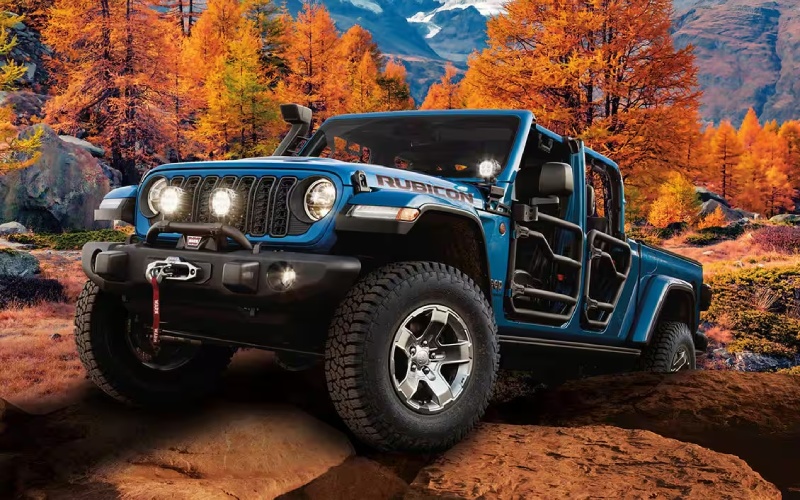
LaFontaine Next Mile – Your guide to used Jeep 4×4 confidence for Plymouth, MI shoppers
Shopping for a used Jeep® is exciting—few names carry the same weight for capability, versatility, and everyday comfort. If you’re considering a Wrangler®, Grand Cherokee, Cherokee, Compass, Renegade, or Gladiator®, this guide breaks down the essentials that matter most to online shoppers in and around Plymouth, MI. We’ll focus on 4×4 systems, common features you’ll see across model years, and how to evaluate the right Jeep for your life, whether your day is mostly errands and school runs or a weekend itinerary that extends well beyond the pavement.
Let’s start with the heart of Jeep capability: traction. Across the lineup, you’ll find a range of 4×4 systems, from part-time setups to full-time systems like Quadra-Trac II® and Quadra-Drive® II. Many models include Selec-Terrain® Traction Management with modes such as Auto, Snow, Sand, Mud, and Rock. Wrangler® often offers additional trail hardware—like locking differentials and, on some editions, electronic sway bar disconnect for increased articulation—while Grand Cherokee can lean into long-distance comfort without giving up the all-weather and light off-road control so many drivers appreciate. The result is a lineup where your choice in Jeep has less to do with which roads you can take and more to do with which one you want to take first.
Inside, the feature sets are equally compelling. Many pre-owned Jeeps include Uconnect® infotainment with crisp touchscreen displays, Apple CarPlay® and Android Auto™, and voice recognition that makes it easy to keep your hands on the wheel. Wranglers® commonly bring washable, durable surfaces and thoughtful storage for recovery gear, while Grand Cherokee interiors often step up with available leather-trimmed seating, heated and ventilated seats, and premium audio from suppliers like Alpine®. Cherokee and Compass deliver easy cargo management with 60/40-split folding second rows and low lift-over heights, plus helpful options like a power liftgate and dual-zone Automatic Temperature Control. Regardless of which model catches your eye, the overall theme is the same—straightforward comfort and durable materials built to keep up with your schedule.
Safety and driver assistance continue to be priorities. Across many used Jeeps you’ll find Blind Spot Monitoring with Rear Cross Path Detection, Adaptive Cruise Control with Stop and Go, Forward Collision Warning with Active Braking, and LaneSense Lane Departure Warning with Lane Keep Assist. ParkView Rear Back-Up Camera and ParkSense Front and Rear Park Assist add confidence in tight parking or busy carpool lanes, while Electronic Stability Control and All-Speed Traction Control support a more settled drive when traffic and road surfaces vary.
If you’re comparing two or three vehicles from your shortlist, use this quick checklist to evaluate where each model shines:
- 4×4 Systems: Identify part-time vs. full-time, and note if Selec-Terrain® is included.
- Off-road Hardware: Look for tow hooks, skid plates, locking differentials, and tire type.
- Interior Comfort: Check seat materials, heating/ventilation availability, and cabin noise.
- Infotainment: Confirm Uconnect® version and whether Apple CarPlay®/Android Auto™ are present.
- Cargo Flexibility: Fold-flat functionality, roof rails, and power liftgate availability.
- Driver Assistance: Note Blind Spot Monitoring, Adaptive Cruise Control, and LaneSense.
- Service Records: Ask for maintenance history and any recent replacements.
What about reliability and ownership experience? Jeep powertrains are built for balanced performance—whether it’s the Pentastar® V6, a turbocharged four-cylinder, or torque-rich diesel options on select models. Many are paired with the TorqueFlite® 8-speed automatic for smooth, efficient cruising. Maintenance items to note are similar to any capable SUV or truck—brakes, tires, fluids, and alignment—so a vehicle that’s been inspected and reconditioned by a knowledgeable team typically offers strong peace of mind.
As you refine your search, look for a buying process that respects your time with digital clarity—transparent vehicle details, easy trade-in valuations, and pre-approval options. That’s where our approach stands out, serving Plymouth, Wixom, and Farmington Hills with a streamlined experience built around your schedule. From high-resolution photos and detailed descriptions to quick walkaround videos on request, everything points toward helping you make an informed choice from the comfort of your couch.
At the reconditioning stage, the essentials matter. A well-prepared Jeep should have brakes and tires measured, fluids checked or replaced as recommended, and key systems—4×4 engagement, suspension components, and steering—verified under load and at speed. Ask for a summary of what’s been inspected and addressed so you can connect what you see on the listing with the work that helps ensure a confident drive.
Many shoppers also weigh customization options. Jeep ownership often includes accessories like all-weather floor mats, roof racks for bikes or cargo pods, and protective add-ons such as rock rails or splash guards. Because factory-compatible accessories are widely available, you can tailor your used Jeep to your needs—without complicating daily driving dynamics or reliability.
Below are a few practical steps to keep your search efficient from start to finish:
- Define your core needs—daily commuting, family hauling, trail outings, or a blend of all three.
- Choose your drivetrain approach—part-time 4×4 vs. full-time 4×4, plus desired traction modes.
- Pinpoint cabin must-haves—heated seats, premium audio, or larger touchscreen.
- Review driver-assist priorities—Adaptive Cruise Control, Blind Spot Monitoring, and LaneSense.
- Request service records and a reconditioning summary for added clarity.
- Complete an online pre-approval to simplify the final steps.
Frequently Asked Questions:
Which used Jeep models are best for all-around family use?
Grand Cherokee and Cherokee often hit the sweet spot—spacious interiors, available advanced driver assistance, strong towing on properly equipped versions, and a confident 4×4 option for year-round traction.
How do Jeep 4×4 systems differ?
Part-time systems are driver-selectable for specific conditions, while full-time systems such as Quadra-Trac II® and Quadra-Drive® II automatically manage torque distribution. Many models include Selec-Terrain® to tailor traction and throttle response to changing surfaces.
What features are common across many used Jeeps?
Uconnect® infotainment, Apple CarPlay®/Android Auto™, multiple USB ports, ParkView Rear Back-Up Camera, and available features like heated seats, roof rails, and power liftgate are frequently found across the lineup.
Is a used Wrangler® practical for daily driving?
Yes. Many Wranglers® are well-suited to daily life—especially with the TorqueFlite® 8-speed automatic—while still offering open-air freedom, strong resale, and unmatched trail credibility when you’re ready to unplug.
How can I shop efficiently online for a used Jeep?
Look for detailed listings with service histories, request a live video walkaround, evaluate your trade online, and complete a quick pre-approval—so your in-store visit is focused on final confirmations and a smooth handoff.
When you’re ready to take the next step, work with a team that knows Jeep® inside and out and prioritizes your time. LaFontaine Next Mile is designed for convenience—virtual tools for shopping and finance, a knowledgeable staff for walkarounds and test drives, and a reconditioning process aimed at long-term satisfaction. With a thoughtful approach to capability, comfort, and digital simplicity, your used Jeep search can be as enjoyable as the drive itself.
Request more information
Connect with us

